March has been a notable month across both technology and representation fronts. Two published pieces reflect where PSW Energy and Perth Solar Warehouse sit within the broader industry: one addresses a question on the minds of many existing Tesla customers, the other documents PSW’s direct participation in a significant international manufacturer event. Together, they speak to something consistent about this organisation: a commitment to staying technically informed and remaining visible within the industry.
This bulletin covers
- Powerwall 2 and Powerwall 3 cross-compatibility — published 10 March
- PSW represents Western Australia at the Sigenergy Nantong Smart Energy Center launch — published 18 March
- Wet weather conditions and rooftop safety — OHS update
Across the month, operations have continued at both Bibra Lake and Neerabup, with the northern location now part of our regular service footprint. The content published this month supports both sales and installation teams. The Powerwall piece equips staff with the language to handle upgrade enquiries accurately, and the Sigenergy piece puts PSW’s Gold Installer standing into a global context worth understanding.
This bulletin also includes a focused OHS reminder on wet weather and rooftop safety. Autumn conditions across the Southwest are now arriving in earnest. The guidance below is a reminder of what our ISO 45001 framework expects, and what good practice looks like day to day.
Powerwall 2 and Powerwall 3 cross-compatibility
Tesla has confirmed that Powerwall 3 will gain backwards compatibility with Powerwall 2 through a software update, and Australia is the first market to receive the feature. This carries real weight for our customer base. A significant number of households served by PSW Energy and Perth Solar Warehouse hold existing Powerwall 2 installations, and until this announcement, the path to expanding their storage capacity was effectively limited: the two generations use different battery chemistries (NMC versus LFP), different system architectures (AC-coupled versus integrated hybrid inverter), and entirely separate control electronics. Mixing them in a single system was not possible.
The published piece walks through the technical distinction between the products and explains what the backward-compatibility software update means in practice: existing Powerwall 2 customers will be able to add Powerwall 3 to expand their storage without replacing their current setup. For staff in sales and customer service roles, this conversation is already arriving. Being able to speak to it clearly and accurately, rather than hedging, reflects the kind of technical confidence customers expect from a Tesla Premium Certified Installer with five consecutive years of recognition.
Updated guidance on the WA rollout timeline will follow once Tesla confirms the sequencing for the Australian market. In the meantime, the full piece is available via the McKercher Corporation news page.
PSW represents WA at the Sigenergy Smart Energy Center launch
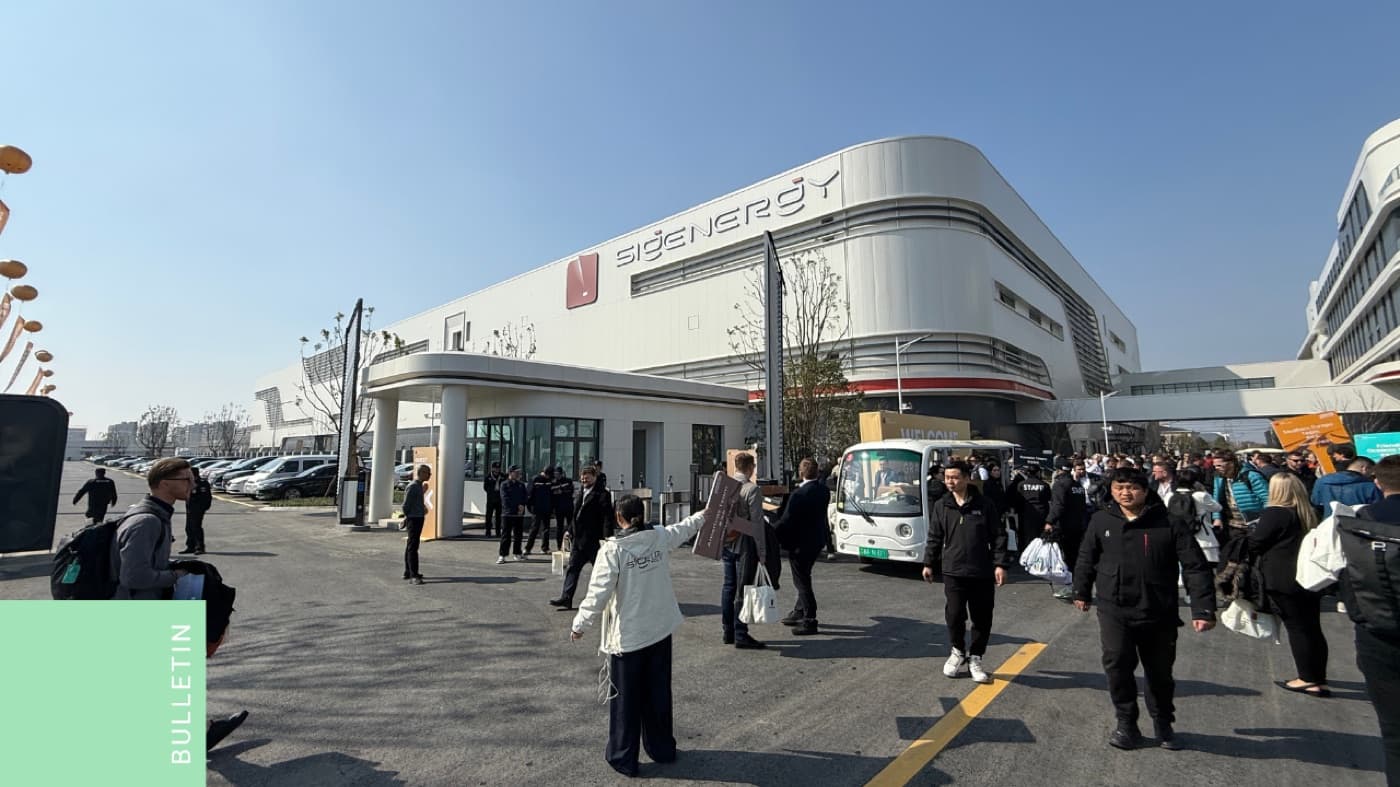
On March 13, 2026, Sigenergy officially inaugurated its Smart Energy Centre in Nantong, Jiangsu Province, China — a landmark event that brought together nearly 2,000 guests from more than 50 countries and regions, including founders, CEOs, and senior executives from leading distributors and installation partners worldwide. PSW was among those present, representing Western Australia at an event of genuine global significance for the Sigenergy partner network.
The Nantong facility is a substantial undertaking: 136,000 square metres of integrated R&D, manufacturing, logistics, and energy management infrastructure, built at an investment of RMB 500 million (approximately USD 70 million). Its production capacity exceeds 300,000 inverters and battery packs annually. Beyond the scale, the facility is built around Sigenergy’s newly announced “AI in All” strategy, an architecture that embeds artificial intelligence across products, software platforms, and manufacturing systems, rather than treating it as a layer added on top. The Nantong centre is where that strategy becomes a physical reality at production scale.
For PSW, attendance at this event reflects the current state of the Sigenergy partnership. As a Gold Installer, PSW Energy and Perth Solar Warehouse are among the installation partners Sigenergy regards as central to its Australian market presence, a market where, according to SunWiz data, Sigenergy has reached the number one position in energy storage. That standing was earned in part through the work of installation partners who backed the product before it was mainstream. Being present in Nantong for this inauguration is a natural extension of that relationship, and the published piece covers both the event itself and the broader product announcements made on the day, including the next-generation SigenStor Neo residential system.
Staff who work closely with Sigenergy products are encouraged to read the full article. Understanding the manufacturer’s direction at this level is relevant beyond installation; it shapes how we position the product with customers who are thinking long term.
Wet weather conditions and rooftop safety
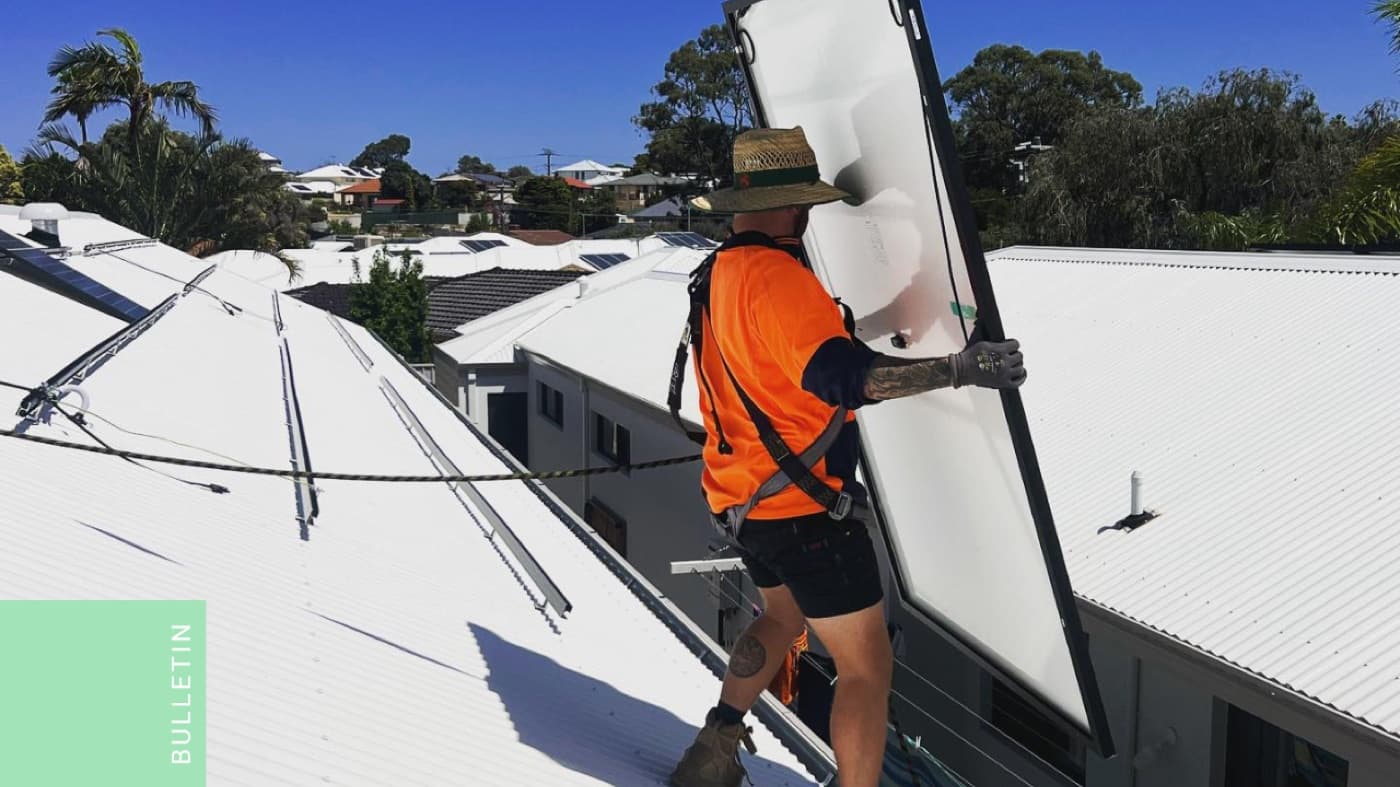
With autumn now established across the Southwest, wet weather is a regular part of the working week. This month’s OHS focus is rooftop safety in deteriorating conditions, not as a seasonal formality, but because wet weather introduces a specific and serious combination of hazards that must be actively managed. As an ISO 45001-certified organisation, McKercher Corporation businesses are held to an internationally recognised standard, and that standard starts with individual decision-making on site, every day.
Do not proceed in unsafe conditions
If a roof surface is wet, mossy, or assessed as slippery at any point during a site visit, work must be paused or rescheduled. No installation schedule justifies working on an unsafe surface. The decision to stand down is always supported by management; it does not require approval to make.
Pre-site weather assessment
Check the Bureau of Meteorology forecast before departing for any rooftop job. If rainfall is predicted or conditions are marginal, contact your scheduler to discuss rescheduling before attending the site. Decisions made under time pressure on a wet roof are where incidents occur.
Footwear and PPE standards
Non-slip, closed-toe footwear rated for rooftop work is mandatory on all installation sites. Harnesses, anchor points, and fall arrest equipment must be correctly fitted and inspected before ascent, regardless of roof pitch or expected duration on the roof.
Electrical hazards in wet conditions
Water and live electrical components are an unacceptable combination. In wet weather, risk of electrical shock at junction boxes, inverters, and panel connections is significantly elevated. Isolate supply at the source before any rooftop electrical work commences. Do not work on live systems in wet conditions under any circumstances.
Ladder safety and access
Ladders must be positioned on firm, level ground and secured before use. Wet ground conditions can shift footings mid-climb. A second person should be stationed at the base wherever possible. Do not carry heavy equipment up a ladder on a wet day without securing assistance.
Incident and near-miss reporting
Any near-miss, slip, or safety concern encountered on site must be reported through the standard incident reporting process. Near-misses are as important to capture as actual incidents; they identify gaps before something more serious occurs. There is no threshold below which reporting is optional.
Managers and supervisors are reminded that AS/NZS 4600 and the relevant provisions of the Work Health and Safety Act 2020 (WA) apply to all rooftop activities. Stop work authority rests with every team member. A technician does not require senior approval to stand down an unsafe site — and will always have the backing of this organisation when they do.
Until next month
March has moved quickly, and the team’s output reflects that. A major manufacturer relationship deepened, a long-standing customer question finally has a clear answer, and the safety standard we hold ourselves to has been restated for the conditions that matter right now. That’s a solid month by any measure.
The April bulletin will continue to track what’s relevant, technically, operationally, and from a compliance standpoint. If there is anything you believe warrants inclusion, raise it with your manager before the end of the month. This bulletin works best when it reflects the organisation as it actually operates, not just from the top down.
Take care of yourselves and each other on site. The work we do matters, and so does the way we go home at the end of the day.
This bulletin is produced for internal distribution. External readers are welcome to review the publicly available content referenced within.