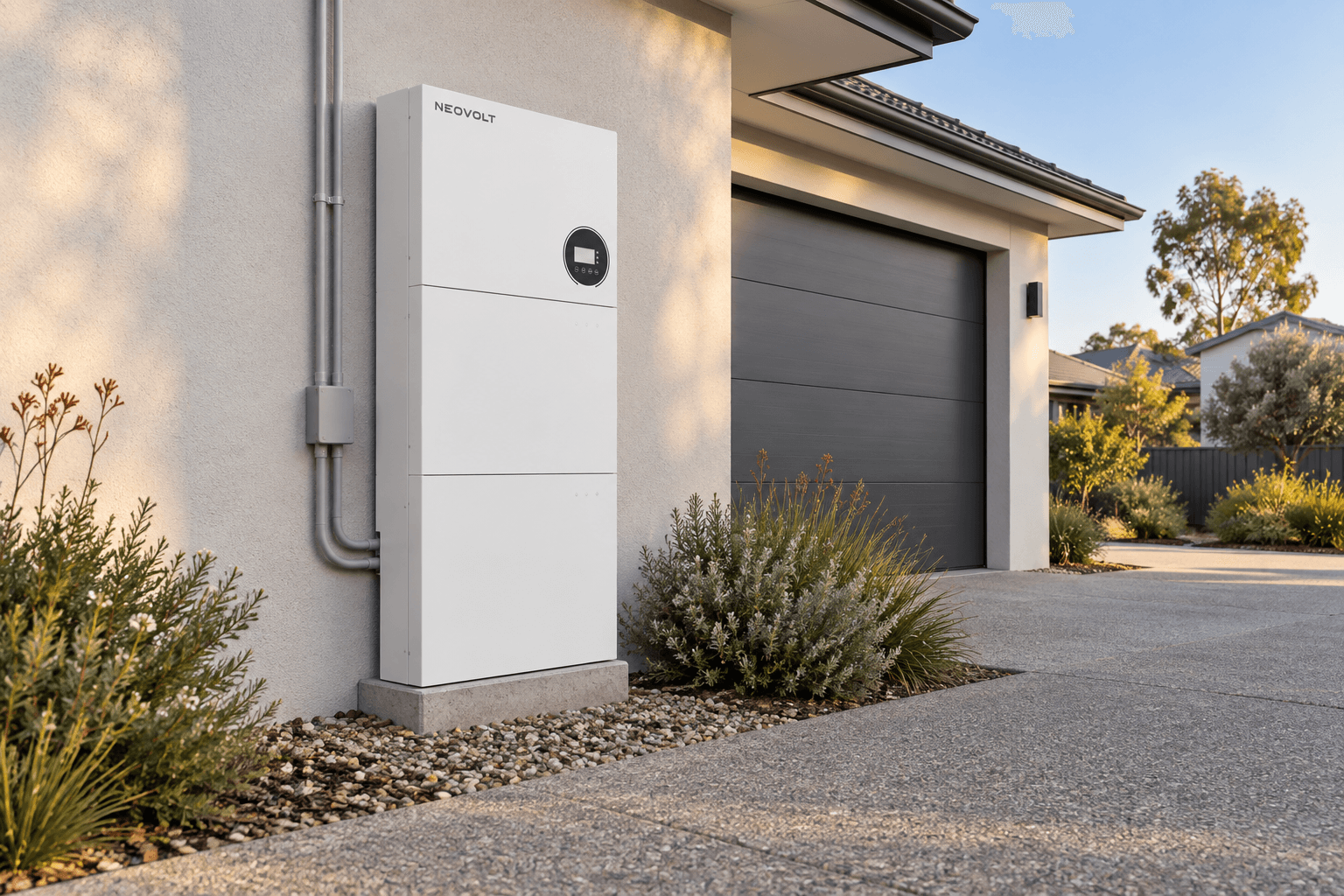
The Clean Energy Council suspended seven Bytewatt NEOVOLT battery models from 15 September 2026. They are ineligible for small-scale technology certificates for installations starting from that date.
The CEC warned that existing Australian stock meant the suspension would affect businesses and consumers.
Affected models
The notice identifies Bytewatt Technology Co., Ltd as manufacturer and NEOVOLT as the brand.
| Affected model |
|---|
| BW-BAT-9.6P |
| BW-BAT-9.6P I |
| BW-BAT-9.6P II |
| BW-BAT-9.6P III |
| BW-BAT-9.6P IV |
| BW-BAT-9.6P V |
| BW-BAT-9.6P VI |
Suspension reasons
The confirmation notice gives two grounds, and neither is a performance or safety finding.
Nameplate labels on products supplied in Australia were found to be inconsistent with the testing and certification documentation originally supplied to the Council. And the manufacturer has failed to clarify why different variants of the BW-BAT-9.6P model were imported, and is unable to distinguish which of its imported stock belongs to each variant.
The 7 September notice gave a third ground ahead of those two: that the IEC 62619 certificate relied upon to approve models BW-BAT-9.6P I to VI for listing was no longer valid. That ground does not appear in the 15 September confirmation, and the Council has not said whether it was withdrawn or resolved. Everything else is unchanged between the two notices: the models, the effective date, the corrective deadline and the case reference.
Stock identification matters because a label correction needs to be matched to the right product variant.
The CEC explicitly says the suspension was not based on a recall or an identified product safety issue.
Suspension and eligibility
A suspension is a temporary removal of a product listing, not a permanent one. The Council's published position on suspensions and de-listings (opens in a new tab) is that products can be removed from the lists for up to three months while corrective actions are undertaken by the supplier, and that suspended products are not eligible for small-scale technology certificates for the period they are suspended.
- 1Notice period before the suspension7 Sept 2026 to 15 Sept 2026
- 2Suspension in force, no STC eligibility15 Sept 2026 to 14 Dec 2026
The suspension took effect on 15 September 2026. If corrective actions are completed within the window the listing is restored; if they are not, the models are de-listed.
Data table
| Event | From | To | Precision |
|---|---|---|---|
| Notice period before the suspension | 7 Sept 2026 | 15 Sept 2026 | Exact |
| Suspension in force, no STC eligibility | 15 Sept 2026 | 14 Dec 2026 | Exact |
| Industry notified | 7 Sept 2026 | Point in time | Exact |
| Suspension takes effect | 15 Sept 2026 | Point in time | Exact |
| Corrective actions due | 14 Dec 2026 | Point in time | Exact |
If corrective actions are completed, eligibility resumes from the date the suspension is lifted. Otherwise the models are de-listed and the manufacturer must reapply.
Installation date governs
The trigger in the notice is the date an installation starts, not the date a battery was bought, delivered, quoted or paid for. A unit sitting in a warehouse on 15 September carries no exemption, and neither does a signed contract.
Check the actual installation start date for each affected job. Buying stock or signing a contract before the suspension does not create an exemption.
WA scheme requirements
Federal battery certificate eligibility depends on the approved product listing. Suspension removes that eligibility for the suspension period.
Synergy and Horizon Power also maintain supported equipment lists with their own technical requirements. Check those alongside the CEC listing. The WA scheme guide explains the separate battery and inverter checks.
Stock and job checks
Check the approved products lists when booking the installation and again before work. A listing checked when the quote was written may have changed.
For questions directed at the manufacturer, the notice names the registered importer as Solar Capital Australia Pty Ltd, contactable at service.au@byte-watt.com or 1300 901 706. Questions about the suspension itself go to the Council's compliance team at compliance@cleanenergycouncil.org.au or +61 3 9929 4174, under reference case 00041718.
Product-record checks
The remaining grounds concern labels and stock identification. Keep model, variant and listing records aligned.
That is the same category of finding the Clean Energy Regulator has been reporting from the other end of the chain. Labelling was the largest single source of findings in the battery inspection results published in June, where the regulator recorded no product faults at all within that cohort and attributed the non-compliance to practice rather than hardware. The regulator's full-year report to 30 June 2026 names labelling as the leading cause again.